
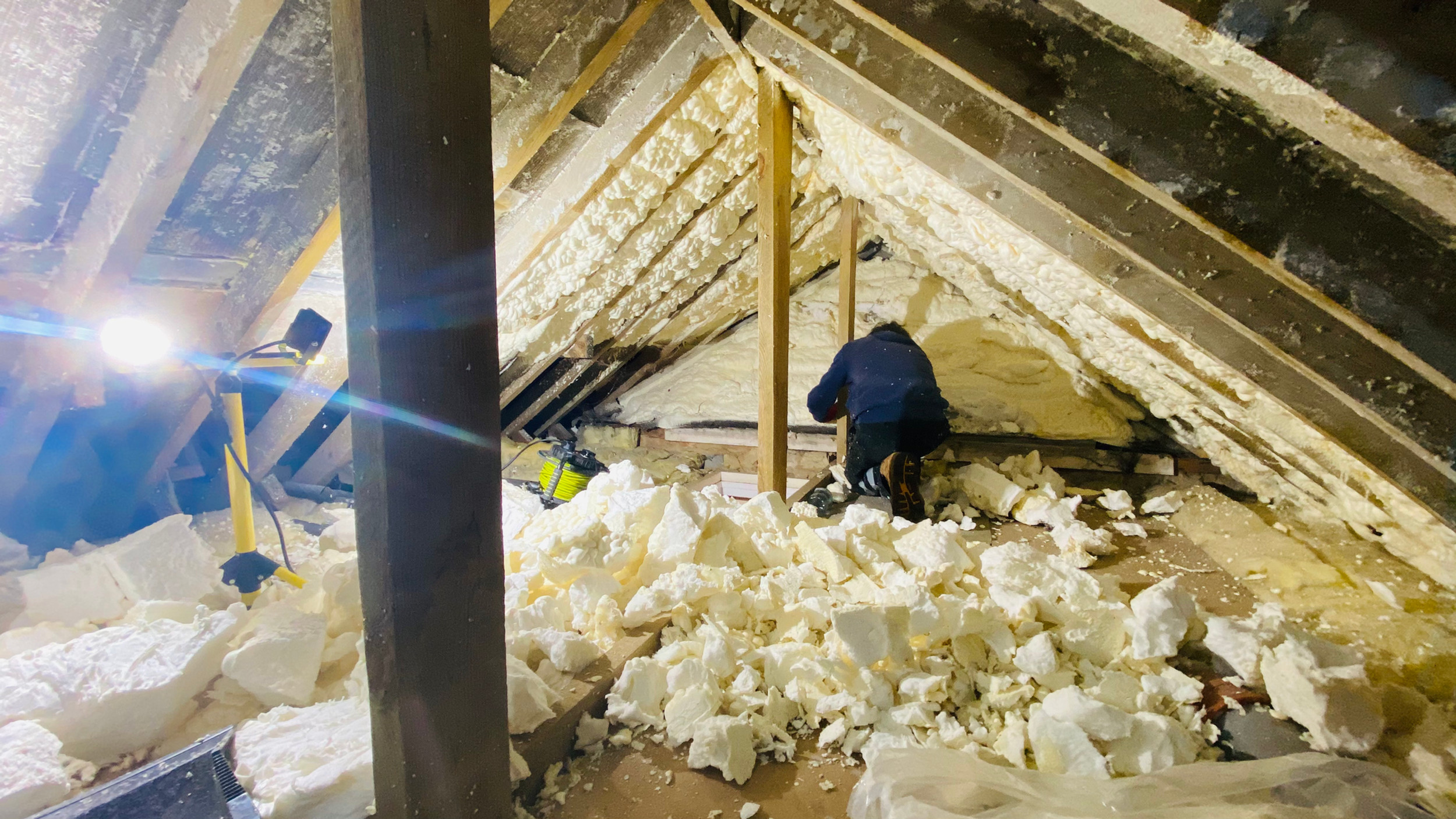
Spray foam insulation is widely used across the UK for improving energy efficiency, but concerns about Spray Foam Causing Damp have become increasingly common among homeowners. While spray foam can be highly effective when installed correctly, poor application, lack of ventilation, or unsuitable property conditions can lead to moisture problems. Understanding how spray foam interacts with your home is essential to preventing long-term structural damage and maintaining a healthy indoor environment.
- What Is Spray Foam Insulation?
- How Spray Foam Causing Damp Happens
- Signs of Spray Foam Causing Damp
- Is Spray Foam Always the Problem?
- The Role of Ventilation
- Impact on Property Value
- How to Prevent Spray Foam Causing Damp
- What to Do If You Already Have Damp
- Expert Advice for Homeowners
- Final Thoughts
What Is Spray Foam Insulation?
Spray foam insulation is a chemical product that expands when applied, filling gaps and creating an airtight seal. It is commonly used in roofs, lofts, and walls to reduce heat loss. However, when Spray Foam Causing Damp becomes an issue, it is often due to improper installation or a misunderstanding of how moisture behaves within a building.
How Spray Foam Causing Damp Happens
Spray Foam Causing Damp typically occurs when moisture becomes trapped within a structure. Spray foam creates an airtight barrier, which can prevent natural airflow. If moisture is already present or enters the structure later, it has no way to escape.
Another major cause of Spray Foam Causing Damp is applying the foam to damp surfaces. If timber or brickwork contains moisture before installation, the foam seals it in, leading to rot, mould, and structural weakening over time.
Poor ventilation is also a leading contributor. Homes need to “breathe,” and when spray foam blocks airflow without alternative ventilation systems, condensation can build up, increasing the risk of Spray Foam Causing Damp.
Signs of Spray Foam Causing Damp
Homeowners should be aware of early warning signs. Spray Foam Causing Damp may present itself through musty smells, visible mould, or damp patches on walls and ceilings. In loft spaces, timber beams may appear discoloured or feel soft to the touch.
Condensation on windows and walls can also indicate that Spray Foam Causing Damp is developing. Over time, this can escalate into more serious problems such as wood rot or damage to roof structures.
Is Spray Foam Always the Problem?
It is important to note that spray foam itself is not always the root cause. Spray Foam Causing Damp is usually the result of incorrect installation or unsuitable property conditions. When installed professionally with proper ventilation, spray foam can perform effectively without causing moisture issues.
However, many cases of Spray Foam Causing Damp arise from installers failing to assess the property thoroughly before application. This highlights the importance of choosing experienced professionals.
The Role of Ventilation
Ventilation plays a crucial role in preventing Spray Foam Causing Damp. Without adequate airflow, moisture from everyday activities like cooking and showering accumulates inside the home.
Proper ventilation systems, such as roof vents or mechanical ventilation, can help reduce the likelihood of Spray Foam Causing Damp. Ensuring that your property has sufficient airflow is one of the most effective ways to avoid moisture-related problems.
Impact on Property Value
Spray Foam Causing Damp can significantly affect your property’s value. In recent years, mortgage lenders in the UK have become cautious about properties with spray foam insulation, especially if there are signs of damp or poor installation.
Surveyors often flag Spray Foam Causing Damp as a risk, which can delay or even prevent property sales. Addressing any issues early is essential to protecting your investment.
How to Prevent Spray Foam Causing Damp
Preventing Spray Foam Causing Damp starts with proper planning. Before installation, ensure that all surfaces are completely dry and suitable for insulation. A professional assessment should always be carried out.
Choosing a qualified installer is critical. Experienced professionals understand how to avoid Spray Foam Causing Damp by applying the product correctly and ensuring adequate ventilation.
Regular inspections can also help. Checking your loft and walls periodically allows you to catch early signs of Spray Foam Causing Damp before they become serious problems.
What to Do If You Already Have Damp
If you suspect Spray Foam Causing Damp in your home, it is important to act quickly. A professional survey can identify the extent of the issue and recommend appropriate solutions.
In some cases, removing the spray foam may be necessary to resolve Spray Foam Causing Damp. This can be a complex process, but it may be the only way to eliminate trapped moisture and prevent further damage.
Improving ventilation and repairing affected areas are also key steps in addressing Spray Foam Causing Damp.
Expert Advice for Homeowners
Homeowners should approach spray foam insulation with caution and awareness. While it offers energy efficiency benefits, the risks of Spray Foam Causing Damp should not be ignored.
Always seek expert advice before installation and ensure that your property is suitable for this type of insulation. Understanding the potential risks of Spray Foam Causing Damp allows you to make informed decisions and protect your home.
Final Thoughts
Spray Foam Causing Damp is a growing concern in the UK, particularly in older properties or poorly ventilated homes. While spray foam can be beneficial, it must be installed correctly and used in the right conditions.
By understanding the causes, recognising the signs, and taking preventative measures, homeowners can avoid the issues associated with Spray Foam Causing Damp. Careful planning, professional installation, and ongoing maintenance are the keys to ensuring your home remains dry, safe, and energy-efficient.