
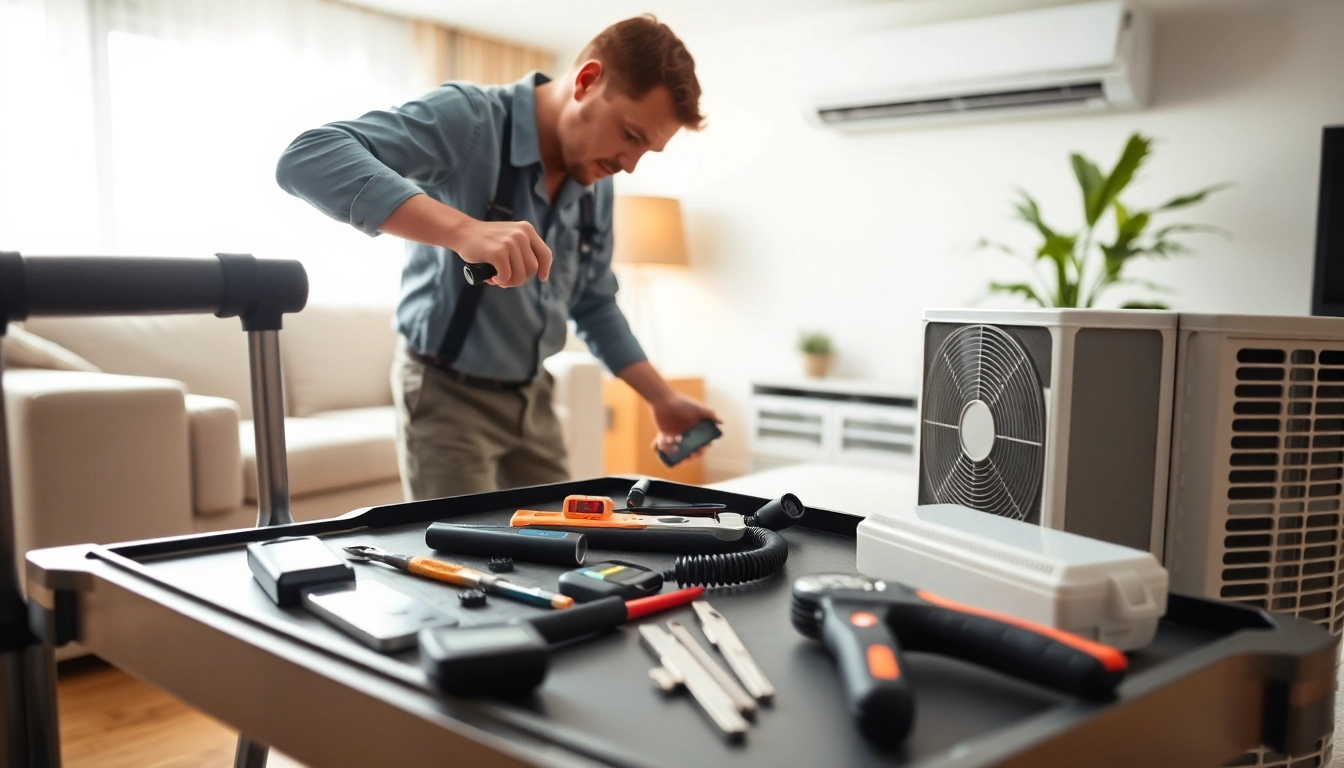
Understanding AC Repair Basics
What is AC Repair?
AC repair encompasses a range of services aimed at maintaining and restoring air conditioning systems to ensure optimal performance. It involves diagnosing issues, replacing faulty components, cleaning parts, and performing necessary adjustments. Effective AC repair not only improves the cooling capabilities of a system but also helps in energy efficiency, extending the lifespan of the unit.
Common AC Issues
Throughout the lifespan of air conditioning systems, several common issues may arise:
- Refrigerant Leaks: A drop in refrigerant levels indicates a leak, which can severely impact cooling efficiency.
- Inconsistent Cooling: When certain areas of a home remain warmer than others, it points to potential ductwork problems or a failing compressor.
- Strange Noises: Unusual sounds like banging or hissing can signify a malfunctioning component or debris obstructing the mechanisms.
- Foul Odors: Musty smells may indicate mold growth in the unit, while burning scents can suggest electrical issues.
- Thermostat Malfunctions: An unresponsive thermostat can hinder temperature regulation, leading to discomfort.
Importance of Regular Maintenance
Regular maintenance of air conditioning systems is essential for sustained functionality. By scheduling routine inspections, homeowners can identify minor issues before they escalate into major repairs. Preventative maintenance also includes cleaning filters, lubricating moving parts, and checking refrigerant levels, ensuring the system operates efficiently. This proactive approach not only enhances comfort but also saves money on utility bills and repair costs over time.
Choosing the Right AC Repair Service
What to Look for in a Technician
Choosing an experienced technician for AC repair is crucial. Here are key aspects to consider when selecting a service provider:
- Certifications: Ensure the technician holds relevant certifications such as NATE (North American Technician Excellence) which demonstrates their expertise.
- Experience: Find out how many years the technician has been in the field and their experience with specific systems.
- Insurance: Verify that the technician is insured to protect against accidents and damages during the repair.
- Diagnostic Skills: A good technician should have strong analytical skills to diagnose issues accurately.
- Communication: They should be able to explain problems and solutions clearly to homeowners.
Comparing Local Services
When looking for ac repair glendale az services, it is important to compare local options. Look for services that offer guarantees on their work, competitive pricing, and rapid response times. Additionally, evaluating their customer service is vital—high-quality services will prioritize customer satisfaction, attention to detail, and maintain an open line of communication throughout the repair process.
Reading Reviews and Testimonials
Online reviews and testimonials provide valuable insights into the quality of service a repair company offers. Sites such as Google, Yelp, and other review platforms allow customers to share their experiences. Checking ratings, feedback on timeliness, quality of work, and customer service experiences will help you make an informed decision. Moreover, pay attention to how companies respond to negative feedback, as it reflects their commitment to customer satisfaction.
The AC Repair Process Explained
Initial Assessment and Diagnosis
The AC repair process typically begins with an initial assessment. The technician will evaluate the unit’s age, service history, and operating status. A systematic diagnosis will follow, often involving:
- Inspecting electrical connections and components
- Checking the refrigerant levels and pressure
- Examining ductwork for leaks or blockages
- Assessing airflow and temperature differentials across the system
This assessment is crucial for formulating an effective repair strategy and addressing issues appropriately.
Repair vs. Replacement Decisions
Depending on the diagnosis, the technician may determine whether repair or replacement is the more cost-effective solution. Factors influencing this decision include:
- Cost of Repair: If repairs exceed 50% of the cost of a new unit, replacement may be advisable.
- Age of the Unit: Older air conditioners may be less efficient, and the frequent need for repairs can lead to higher long-term costs.
- Energy Efficiency: Newer models are more energy-efficient, which could greatly reduce utility bills.
- Warranty Coverage: Check if existing warranties cover certain repairs that might affect the decision.
Tools and Techniques Used
AC repair technicians utilize a wide array of tools and techniques to diagnose and fix issues. Common tools include:
- Multimeters: For electrical diagnostics and checking circuit continuity.
- Refrigerant Gauges: To measure refrigerant pressures and assess system performance.
- Leak Detectors: For identifying refrigerant leaks in lines and fittings.
- Thermometers: To monitor temperature variations to ensure efficient cooling.
The knowledge of which tools to deploy, combined with skillful techniques, ensures effective and efficient repairs.
Cost Factors in AC Repair
Understanding Pricing Models
The cost of AC repair can vary widely based on multiple factors such as type of unit, nature of the issue, and geographic location. Most service providers have a flat rate or hourly rate model. Factors contributing to pricing include:
- Type of Repair Needed: Simple fixes will cost less compared to extensive repairs involving replacement parts.
- Labor Costs: Shops in urban areas may charge more due to higher overhead costs.
- Part Quality: OEM parts (Original Equipment Manufacturer) tend to cost more but often provide better longevity.
- Emergency Services: Calls during off-hours or weekends may incur additional fees.
Finding Affordable Services
Finding affordable AC repair services involves more than simply searching for the lowest price. Consider these strategies:
- Compare Quotes: Obtain multiple quotes from different service providers.
- Seasonal Promotions: Look for seasonal deals or service packages that combine maintenance with repairs.
- Maintenance Contracts: Some companies offer contracts with discounted rates for repairs if you’re a regular customer.
Investing in higher-quality services upfront may save money and stress in the long run.
Insurance and Warranty Considerations
Understanding the intricacies of insurance and warranties is crucial. Many home insurance policies cover specific types of damage to air conditioning systems. Additionally, manufacturers often provide warranties covering parts and services for a set duration after purchase. Here are some considerations:
- Check Your Policy: Review your home insurance for AC system coverage, understanding any deductibles that may apply.
- Warranty Requirements: Adhere to maintenance guidelines outlined in warranties to avoid voiding your coverage.
- Extended Warranties: Evaluate if an extended warranty might be a wise investment for a new unit to cover potential repairs.
Preventative Measures for AC Longevity
Simple DIY Maintenance Tips
Homeowners can undertake various simple maintenance tasks to prolong the life of their AC systems. Regular upkeep not only reduces the likelihood of breakdowns but also enhances unit efficiency:
- Clean or Replace Filters: Clogged filters can reduce airflow and increase energy costs. Regular cleaning or replacement is essential.
- Inspect and Clean Coils: Ensure outdoor coils are free of debris to facilitate proper heat exchange.
- Check Drain Lines: Clogged drain lines can lead to water damage and mold growth. Regularly inspect and clear as necessary.
- Keep Condenser Units Clear: Ensure adequate space around the outdoor unit, keeping vegetation and debris away.
When to Call a Professional
While many maintenance tasks are manageable for homeowners, certain situations require professional intervention. Signs that indicate a professional’s touch is needed include:
- Continuous System Cycling: If your system cycles on and off frequently without reaching set temperatures.
- Strange Sounds or Smells: Any unusual noise or odor should prompt immediate professional evaluation.
- Frequent Repairs: If repairs become a constant need, consider consulting a professional to evaluate the unit’s condition overall.
- High Energy Bills: A sudden spike in energy costs may indicate an underlying issue that needs addressing.
Benefits of Routine Checkups
Investing in routine AC checkups yields numerous benefits. By regularly assessing functionality, homeowners can experience:
- Increased Energy Efficiency: A well-maintained system uses less energy, translating into lower utility costs.
- Extended System Lifespan: Routine service helps catch issues early, potentially avoiding premature breakdowns.
- Improved Air Quality: Regular maintenance ensures that filters and coils are clean, promoting better indoor air quality.
- Peace of Mind: Scheduling regular checkups alleviates stress and uncertainty regarding system performance.